₦3 billion in revenue and no investors: How Fixr is rewriting service delivery
Fixr employs 400 technicians, runs its own logistics, and has processed nearly ₦5bn in solar financing, all without VC funding. Here’s how it’s scaling a contractor-led model across Nigeria and beyond.
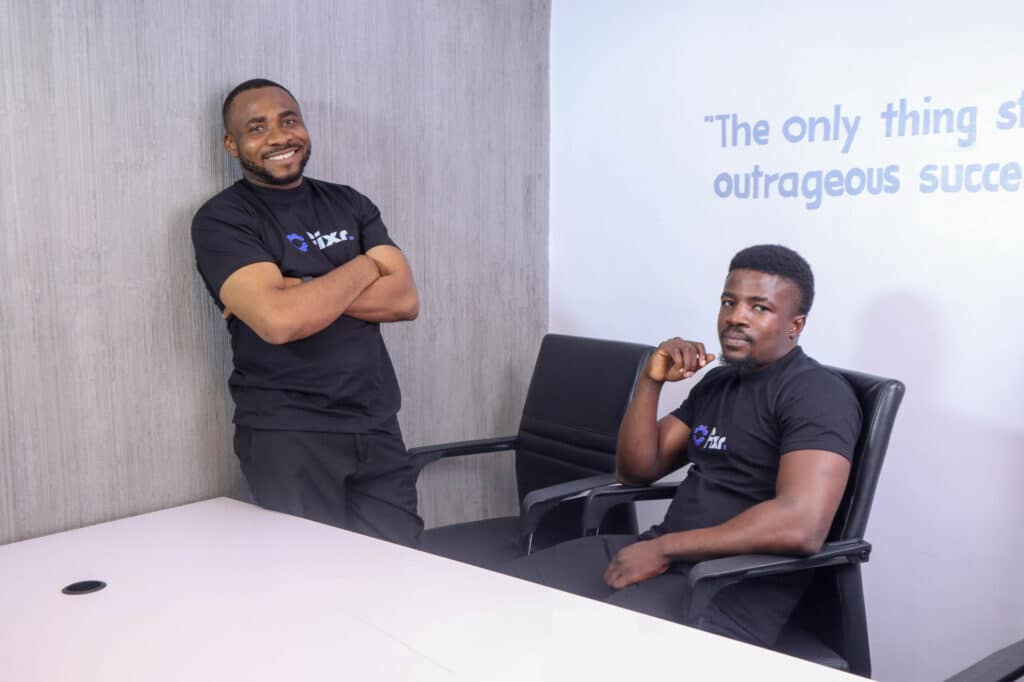
Ikechi Adolphus did not set out to build a startup. He set out to build a business that could be trusted and could eventually be layered with technology to scale. When he speaks about Fixr Technologies, the Lagos-based engineering services company he co-founded with Olamide Akangbe, he explains that he does not want Fixr to be called a marketplace. He does not want it misunderstood as a platform that connects customers with technicians.
Since pivoting to a technology-focused structure in early 2023, the company now operates across multiple geopolitical zones in Nigeria, with a presence in Ghana and Nairobi. It employs roughly 400 technicians, a majority of whom are full staff members on salary; manages five to six dark stores for component warehousing; runs an in-house logistics operation; and has processed close to ₦5 billion in gross merchandise value (GMV) on its renewable energy financing arm alone.
By Adolphus’ account, the business grew seven times year-over-year in its last full year and is on track to grow ten times that figure in 2026. And it has done all of this without a single naira of outside investment.
The business launched in its current form in early 2023, and in 2025, its revenue grew…billion; Adolphus expects…
Not a marketplace, a contractor
Nigeria has seen its share of attempts at service marketplaces — platforms that onboard technicians, list them for hire, and take a cut of whatever transaction follows. The model is familiar, and, according to Adolphus, fundamentally broken.
In the conventional marketplace model, a technician who does excellent work at a client’s home becomes a liability to the platform. The satisfied customer takes the technician’s number, cuts out the middleman, and calls him directly the next time something breaks. On the other hand, if the technician does poor work, the customer simply does not return. In either scenario, the platform loses. Adolphus tried this model. It did not scale.
Related Story:
How Clarus wants to fix one of Afri...